
USPTO Patent Search (Enterprise Search Technology)
OVERVIEW
The Enterprise Search Technology project at USPTO was established to replace the legacy systems patent examiners use to search existing patents. This tool facilitates the examination process and ultimately helps the examiner to determine if a patent application will be accepted. Speed, efficiency and reliability of results are key to ensure that examiners have the data they need to efficiently manage the backlog of incoming claims. The project sought to build a single unified search interface, leveraging the speed, stability and advanced search relevancy features of the Solr search platform.
The Challenge: EAST MEETS WEST
One of the principle challenges of the project was to balance the needs of the two legacy systems, EAST and WEST. Each tool represented a fundamentally different approach to the patent examination process. WEST users valued the simplicity and efficiency of a Google-like search interface with minimal functionality to interfere with their process, which often involved significant processing outside of the tool. EAST users relied on extensive features to maximize efficiency and accommodate the variability in process with which the patent examiners worked, an experience which WEST users found overly complicated and difficult to learn.
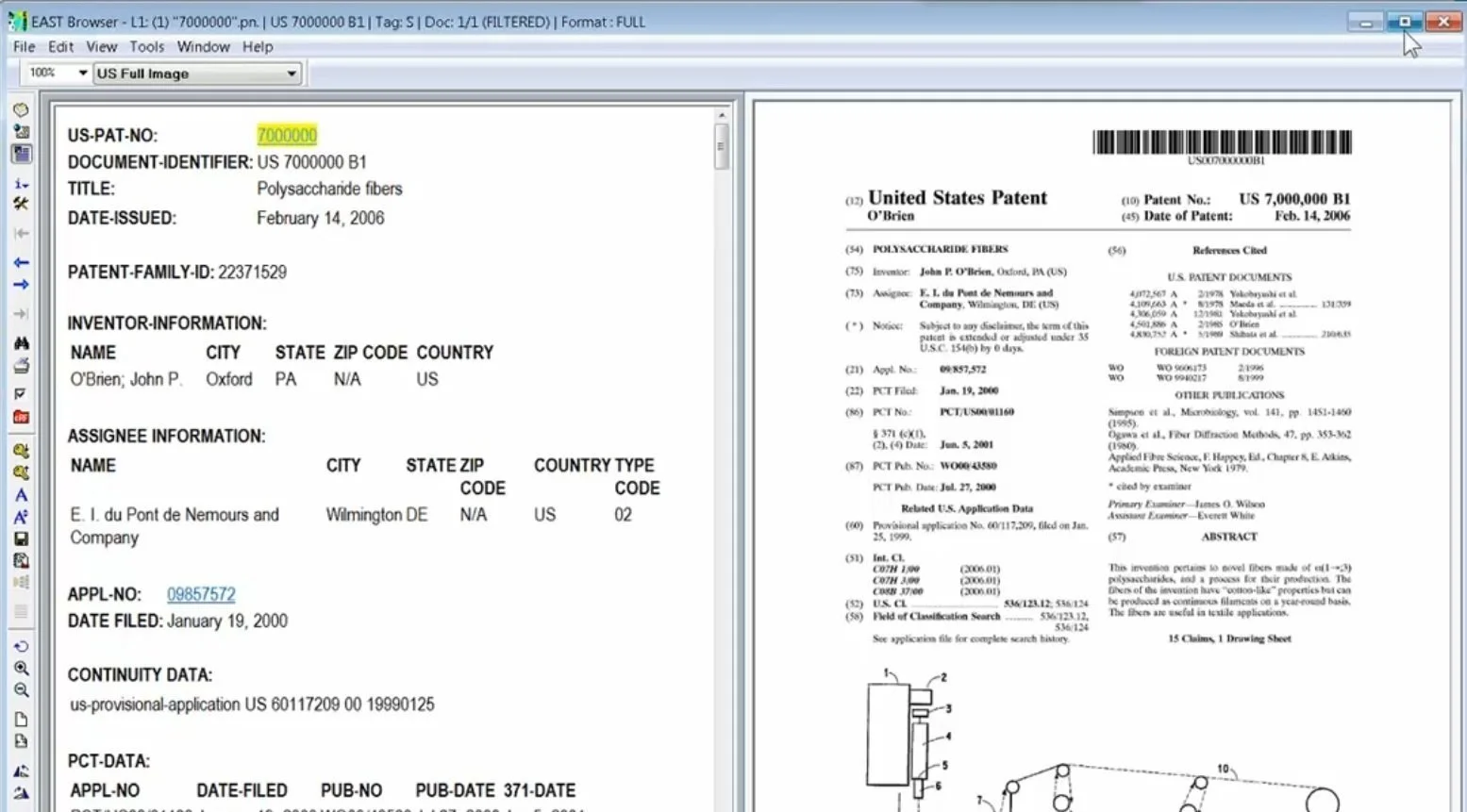
EAST
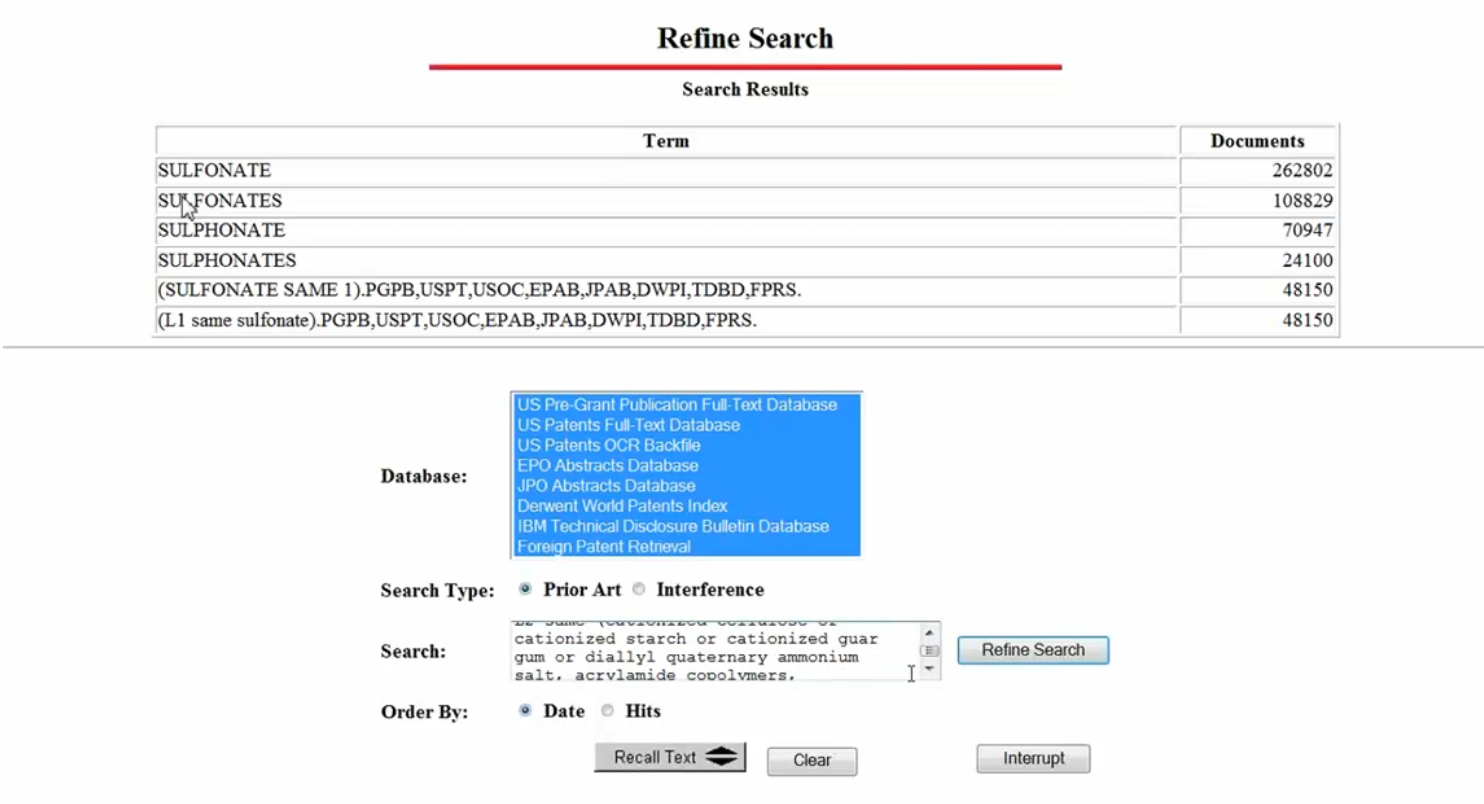
WEST
MAPPING THE PROCESS
In order to reconcile the complexities created by combining two distinctly different search interfaces, while also leveraging new functionality available to us within the Solr framework, we set out to develop a comprehensive mapping of the patent examiners and the examination process. Through a series of one-on-one sessions, focus groups and broader surveys we developed and refined user personas and user scenarios for patent examiners in the nine different technology centers. We further mapped the process through individual flows, accounting for both the steps the examiner was taking, and how those actions mapped to the existing tools.
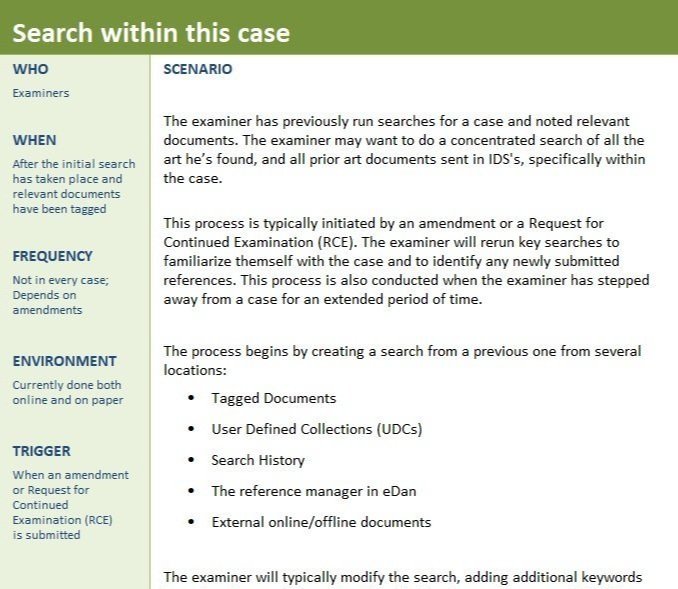
User scenarios
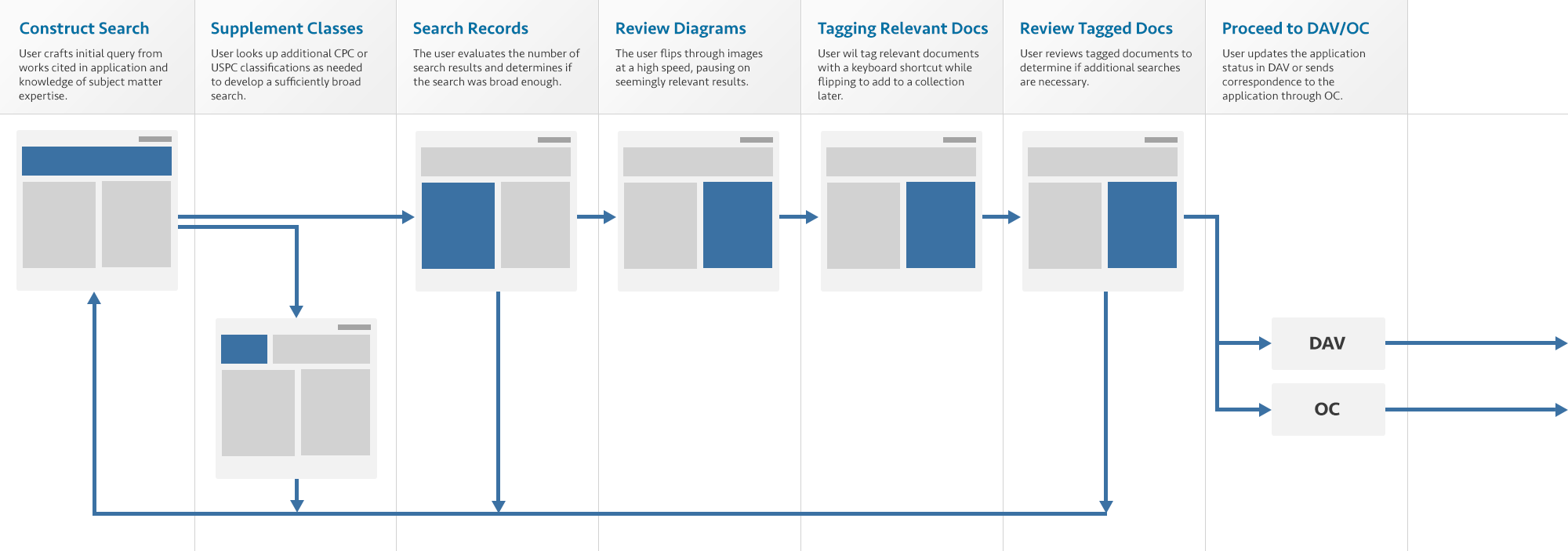
Mapping the autoflip process

FEATURE PRIORITIZATION
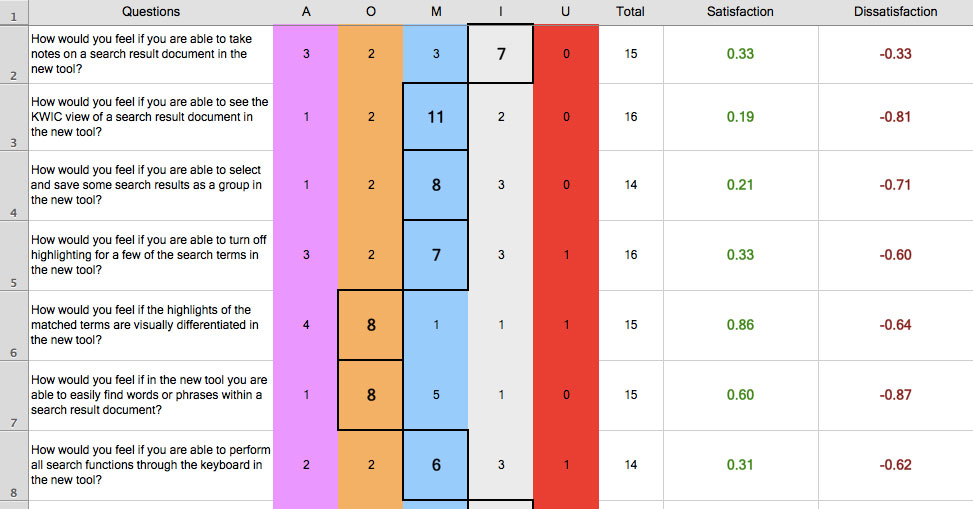
Once we developed a reasonable understanding of the breadth of the user needs, we moved to assisting the product team in developing a scope for the MVP. In order to determine feature needs and priority, we developed a kano survey to help distinguish between the absolutely required functionality, and the nice-to-have features that would enhance the user experience. A key challenge was finding the balance between strict feature parity and new innovation, as we knew that both would be necessary elements to drive user adoption and ultimately satisfaction.
Through the Kano survey we were able to gather input from a much larger group than we were able to reach through direct interviews, and thus able to develop a more comprehensive understanding of user needs and wants. Additionally, we supplemented the findings of the kano survey with usage metrics to determine if there were discrepancies between features users thought to be of high value, but ultimately were not being used. Through this method we were able to refine the scope of our MVP to a reasonable balance.
DESIGN PROCESS
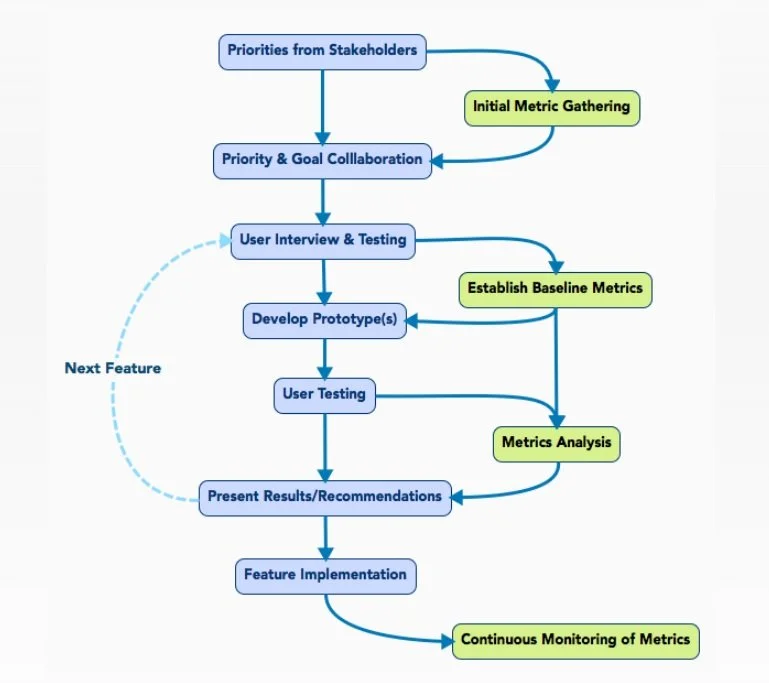
In developing and testing designs for the application, we applied an iterative design process, working collaboratively with the product team to balance the business requirements, security and legal restrictions, and ultimately, the user needs. This allowed us the confidence going into user testing that our designs were feasible from the technical side and would meet the needs of the organization as a whole.
Working off of the prior user scenarios and process flows, we developed low fidelity wireframes to quickly iterate on concepts, tested and refined based on user feedback, and translated those concepts into high fidelity mockups using the established design pattern library. Using a data-driven approach, we combined the qualitative feedback from users with quantitative metrics to further strengthen our confidence in the designs we ultimately passed off to the development team.
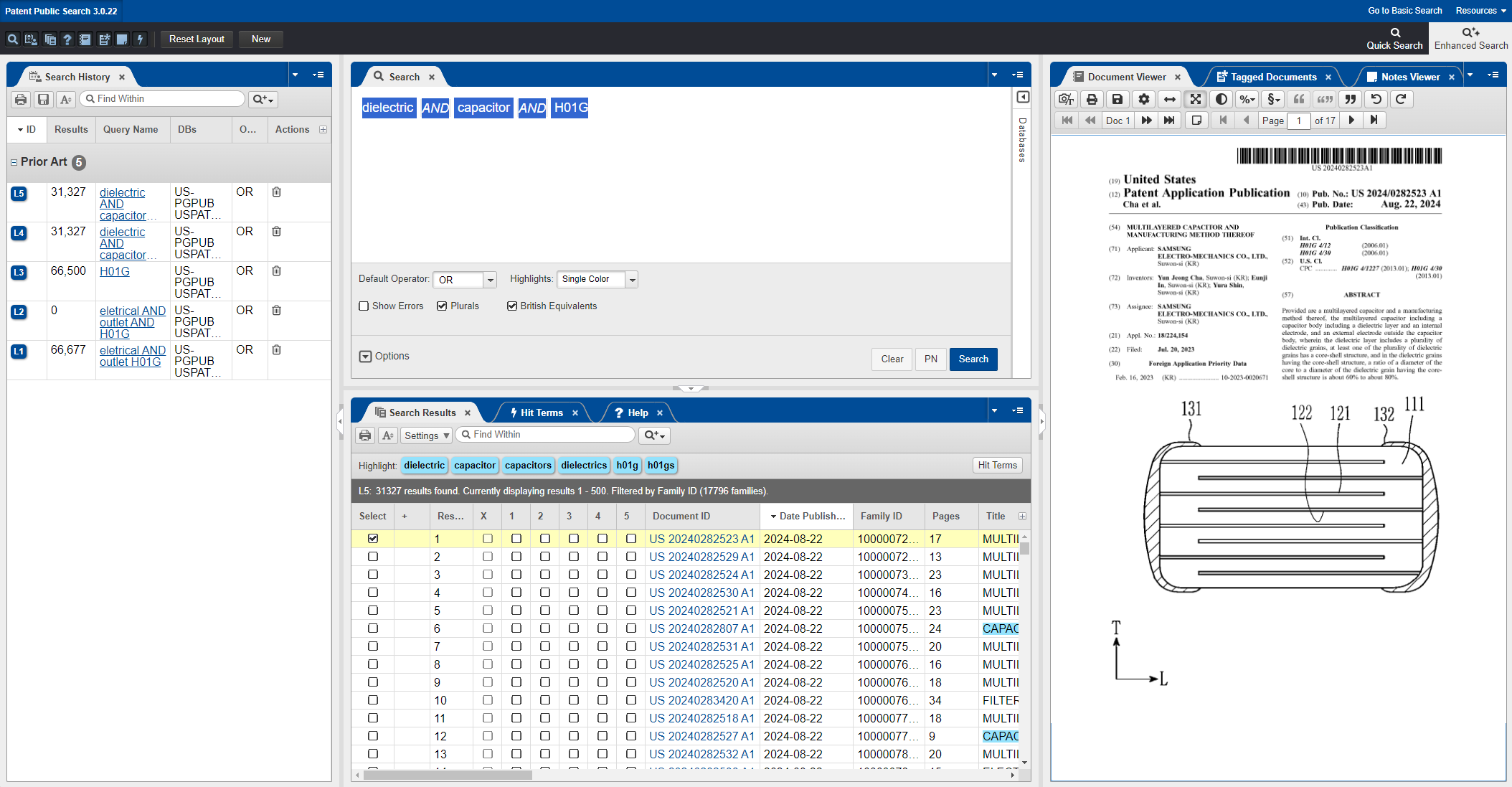
An EAST-style layout in the EST application
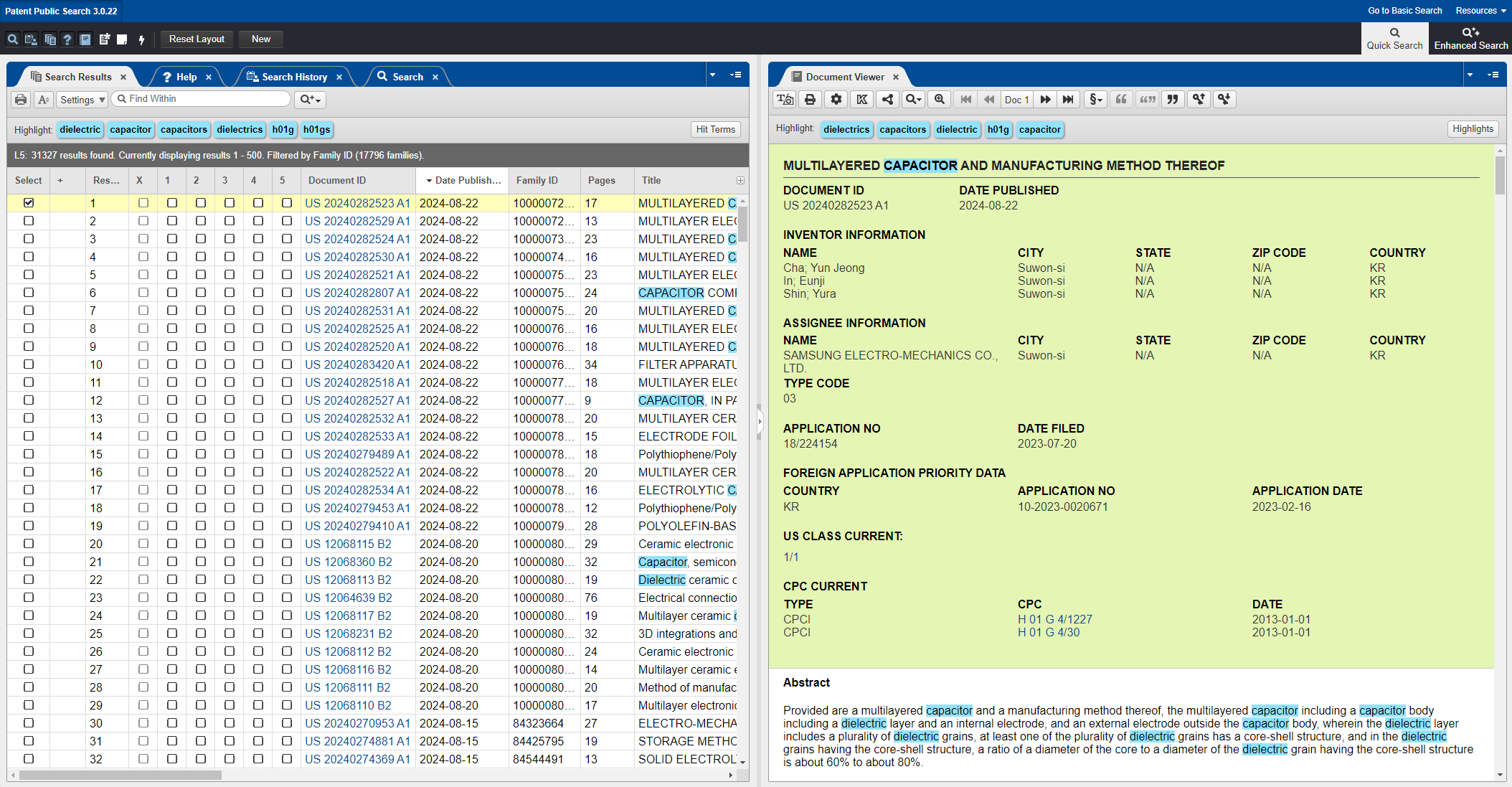
A WEST-style layout in the EST application
OUTCOME
The solution we developed featured a modular concept that allowed extensive customization to accommodate the variety of needs between different classes of patent examiner. Building a solution with the robust underlying feature set, and the ability for a simplified user interface on the surface, allowed the necessarily flexibility to ultimately drive adoption for the new tool. I was no longer with the project at the time of release, but after an extensive period of testing and continuous feedback, the legacy EAST and WEST tools were officially retired and EST was fully adopted by the patent corps. Additionally, this tool was adapted to replace the public patent search tool, and is currently available to all users.
https://ppubs.uspto.gov/pubwebapp/